Explainer
Why is my check engine light on? The common causes in order
Published
Short answer
The check engine light comes on when the engine computer detects a fault that can raise emissions or affect how the engine runs. Common causes include a loose or worn gas cap, EVAP leaks, oxygen sensor faults, misfires from plugs or coils, vacuum leaks that cause a lean condition, and catalytic converter efficiency. The only way to know which one is to read the stored code with an OBD2 scanner.
Tools for this job
All 7 picks compared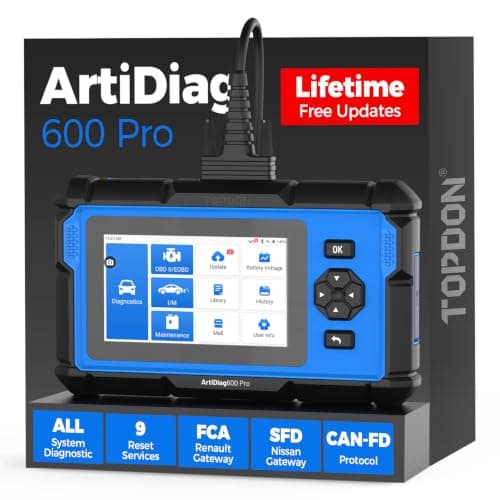
TOPDON ArtiDiag600 Pro: all systems, 9 services
See price on AmazonSee it on Amazon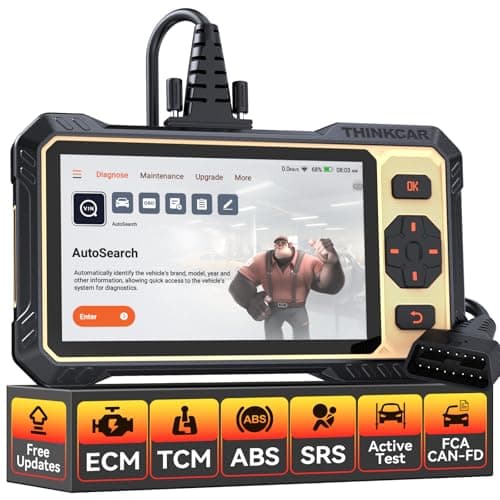
THINKCAR THINKSCAN 662: active tests under $200
See price on AmazonSee it on Amazon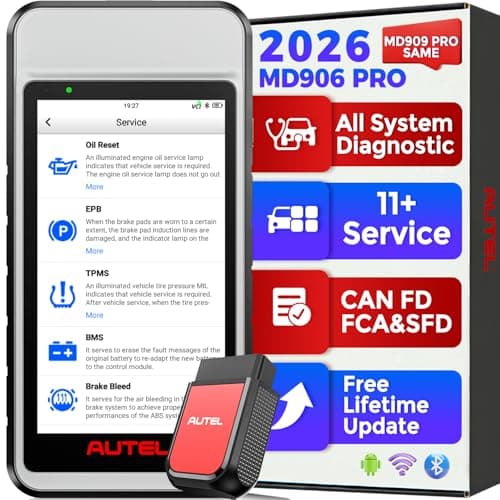
Autel MaxiDiag MD906 PRO: all systems, 11 services
See price on AmazonSee it on Amazon
This page is for drivers who just saw the amber engine symbol on the dash and want to know what it means and how worried to be. It explains what the check engine light actually monitors, lists the common causes roughly from simplest to most serious, and shows how to read the code yourself so you walk into a shop, or the parts store, knowing what you are dealing with. If the light is flashing, skip ahead to the safety section first.
What the check engine light means
The check engine light, also called the malfunction indicator lamp or MIL, is part of the OBD2 system required on US cars and light trucks since 1996. The engine computer runs self tests on sensors, ignition, fuel delivery and emissions parts. When a test fails, often on two drives in a row, it stores a diagnostic trouble code and turns on the light.
The light does not tell you how serious the problem is by itself. A loose gas cap and a failing catalytic converter both turn on the same lamp. The code behind it tells the story, and you can read it with any OBD2 scanner. The guide to reading OBD2 codes explains what each character means.
- Check engineP codes
- ABSC codes
- Airbag / SRSB codes
- Tire pressureTPMS
- Battery / chargingCharging
- NetworkU codes
Solid vs flashing: how urgent is it
A solid light means a fault was found but the engine is not in immediate danger. You can usually keep driving carefully and get the code read soon. A flashing light means the computer sees a misfire severe enough to damage the catalytic converter. Unburned fuel is going into the exhaust and can overheat the converter.
If the light flashes, reduce load, avoid hard acceleration, and get off the road when it is safe. The solid vs flashing comparison and can you drive with the check engine light on go deeper.
Note.Also stop driving if the light comes on with low oil pressure, a high temperature gauge, smoke, a fuel smell, or a big loss of power. Those signs point to damage that gets worse with every mile.
The common causes, roughly simplest first
This list follows the standard diagnostic order: cheap and common first, expensive last. Your code decides where you actually start.
| Cause | Typical codes | What it means |
|---|---|---|
| Loose, damaged or wrong gas cap | P0455, P0456, P0457 | The EVAP system cannot hold pressure |
| EVAP leak or purge or vent valve fault | P0442, P0446, P0455, P0456 | Fuel vapor system leak or valve not working |
| Oxygen sensor or heater circuit | P0135, P0141 | Sensor heater or signal out of range |
| Vacuum leak or dirty MAF sensor | P0171, P0174, P0101 | Engine running lean or airflow reading off |
| Spark plugs, coils or injectors | P0300, P0301 to P0308 | One or more cylinders misfiring |
| Thermostat stuck open | P0128 | Engine not reaching normal temperature |
| EGR flow problem | P0401 | Not enough exhaust gas recirculation |
| Catalytic converter efficiency | P0420, P0430 | Converter not storing oxygen as it should |
Gas cap and EVAP problems
A gas cap that is loose, cracked or missing its seal is one of the most common reasons for the light, especially right after a fill up. The EVAP system seals the fuel tank and runs a leak test, and a bad cap fails it. Codes like P0455 and P0456 are typical. Tighten the cap until it clicks, check the seal, and give the car a few days of driving. The light will not go off right away because the system has to rerun its test. See check engine light after getting gas for more.
Sensor, air and fuel problems
Oxygen sensors and their heater circuits fail with age. A sensor fault often shows up as a code with no change in how the car drives. Lean codes like P0171 usually come from unmetered air: a cracked intake hose, a leaking vacuum line or PCV hose, or a dirty mass airflow sensor. Weak fuel pressure can cause the same codes. Reading fuel trims in live data is the fastest way to narrow this down.
Misfire codes like P0300 come from worn spark plugs, failing ignition coils, leaking injectors or, less often, mechanical problems such as low compression. Swapping a coil to another cylinder and seeing if the misfire follows it is a classic DIY test.
Catalytic converter codes
P0420 means the downstream oxygen sensor shows the converter is not working as well as it should. It is often the end result of another problem, such as long term misfires, oil burning or a rich condition. Before buying a converter, fix any other codes, check for exhaust leaks ahead of the rear sensor, and confirm the sensors are working. Many converter codes come back after a new part because the root cause was never fixed.
How to find your actual cause
Many auto parts stores read codes for free, but owning a scanner lets you see live data, pending codes and readiness monitors whenever you want. Our best OBD2 scanners for DIY mechanics guide covers tools that do all of this. If you prefer using your phone, see the wireless Bluetooth scan tool guide.
- 1
Note whether the light is solid or flashing and how the car drives.
- 2
Plug an OBD2 scanner into the port under the dash and read all codes.
- 3
Save the freeze frame data to see the conditions when the code set.
- 4
Look up each code and check the simplest causes first.
- 5
Repair the cause, clear the code, and drive normally so the monitors rerun.
Frequently asked questions
Will the check engine light go off by itself? Sometimes. If the fault goes away, such as a tightened gas cap, the computer turns the light off after several good drives in a row. The code stays in history for a while.
Is it safe to drive with the check engine light on? If it is solid and the car drives normally, usually yes for a short time, but get the code read soon. If it is flashing, reduce speed and stop driving as soon as you safely can.
Can low oil turn on the check engine light? Low oil usually triggers a separate oil pressure warning. On some engines, low oil can affect variable valve timing and set timing codes that turn on the check engine light.
Does disconnecting the battery fix it? It may turn the light off on many cars, but it does not fix anything. The light comes back if the fault is still there, and the monitors reset, which can cause an inspection failure.
What you need for this
- See price on AmazonAmazon
TOPDON ArtiDiag600 Pro: all systems, 9 services
From Best OBD2 scanners for DIY mechanics who fix their own cars
 See price on AmazonAmazon
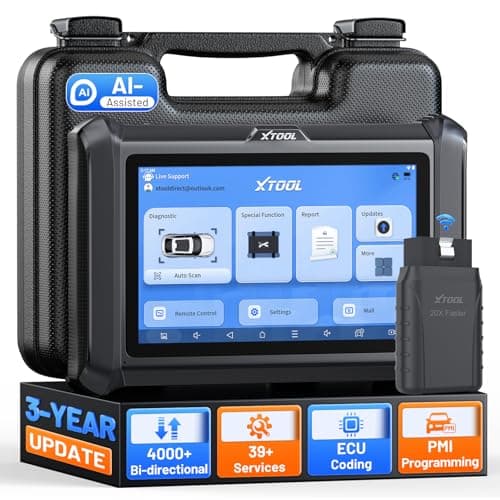
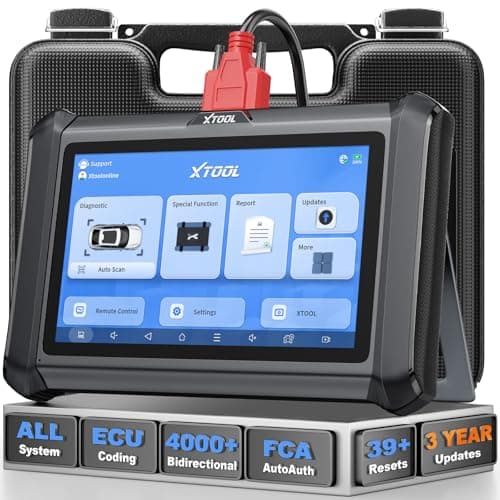
XTOOL D7W: WiFi VCI, 4000+ active tests
 See price on AmazonAmazon
XTOOL D7S: CAN FD for newer GM, crankshaft relearn