- System
- Powertrain
- Type
- Generic (SAE)
- Subsystem
- Ignition system or misfire
- Urgency
- Stop driving
Trouble code
P0300 code: Random/multiple cylinder misfire detected
Published
Short answer
P0300 means the engine computer detected misfires that are not limited to one cylinder. Common causes are worn spark plugs, failing ignition coils, vacuum leaks, low fuel pressure, dirty injectors or a faulty MAF sensor. If the check engine light is flashing, the misfire is severe enough to damage the catalytic converter, so stop driving and get it fixed.
Scan tools that read P0300 and more
All 7 picks compared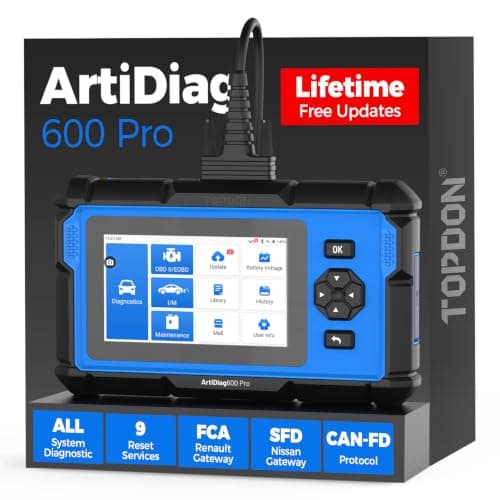
TOPDON ArtiDiag600 Pro: all systems, 9 services
See price on AmazonSee it on Amazon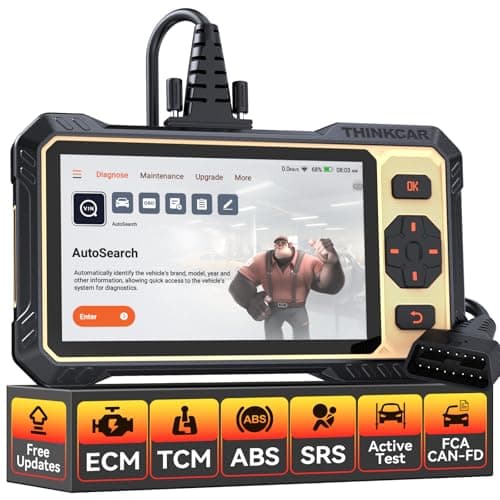
THINKCAR THINKSCAN 662: active tests under $200
See price on AmazonSee it on Amazon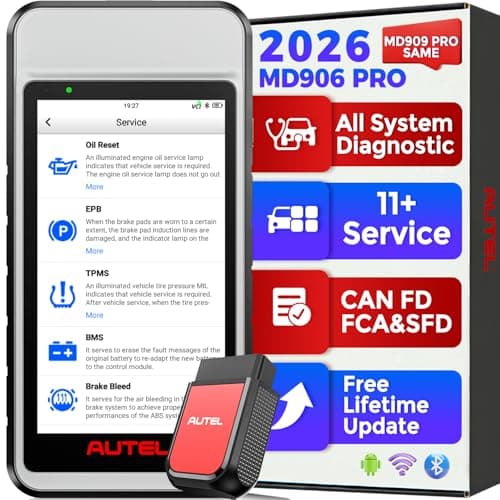
Autel MaxiDiag MD906 PRO: all systems, 11 services
See price on AmazonSee it on Amazon
This page is for drivers who have a P0300 code, a shaking or stumbling engine, or a flashing check engine light. P0300 is one of the most important codes to take seriously, because ongoing misfires send unburned fuel into the exhaust and can overheat the catalytic converter. Below we explain what the code means, the symptoms, the causes in the order to check them, how to use a scan tool to narrow it down, and when it is safe to drive. For a single-cylinder misfire, see P0301.
What P0300 means
P0300 is a generic SAE code: Random/Multiple Cylinder Misfire Detected. The engine computer watches the speed of the crankshaft. When a cylinder fires, the crankshaft speeds up a little. When a cylinder misfires, it does not. If the computer sees misfires in several cylinders, or cannot pin them to one cylinder, it sets P0300.
The codes P0301 through P0308 (and higher on larger engines) point to a specific cylinder. P0300 often appears with one or more of those. When it appears alone, the cause is usually something that affects the whole engine, such as fuel pressure, a vacuum leak or a sensor. Look up related codes with our code decoder.
- Check engineP codes
- ABSC codes
- Airbag / SRSB codes
- Tire pressureTPMS
- Battery / chargingCharging
- NetworkU codes
Symptoms of P0300
A flashing check engine light is the engine computer's way of saying the misfire rate is high enough to harm the catalytic converter. Learn the difference in solid vs flashing check engine light.
- Check engine light on, or flashing when the misfire is severe
- Rough idle, shaking or vibration
- Stumbling or hesitation when accelerating
- Loss of power
- Poor fuel economy
- Smell of raw fuel from the exhaust
- Hard starting on some vehicles
Common causes of P0300
Work from the top of this table down. Ignition parts are a common cause on higher-mileage engines. If the misfire is spread across all cylinders, think about causes that affect the whole engine, like air, fuel and sensors.
| Cause | How to check | Typical fix |
|---|---|---|
| Worn or fouled spark plugs | Remove and inspect the plugs; check the maintenance schedule | Replace the plugs with the correct type and gap |
| Failing ignition coil or plug wire | Check misfire counts per cylinder; swap a coil to another cylinder and see if the misfire follows | Replace the faulty coil or wire |
| Vacuum leak | Listen for hissing; check fuel trims at idle; smoke test the intake | Replace the cracked hose or gasket |
| Low fuel pressure | Fuel pressure gauge test against spec; clogged filter or weak pump | Replace the fuel filter or pump |
| Dirty or failing fuel injectors | Injector balance test or check misfire counts; listen for clicking | Clean or replace injectors |
| Dirty or faulty MAF sensor | Compare MAF reading at idle and under load to expected values | Clean with MAF cleaner or replace |
| EGR valve stuck open | Rough idle that smooths out off idle; check EGR live data | Clean or replace the EGR valve |
| Low compression or mechanical problem | Compression or leak-down test | Engine repair, such as valves, rings or head gasket |
| Bad gas or water in fuel | Misfires started right after a fill-up | Drain and replace the fuel |
How to diagnose P0300
A scan tool that shows live misfire counts and fuel trims is very helpful here. See our guide to OBD2 scanners for DIY mechanics.
- 1
Read all codes. Note any cylinder-specific codes (P0301 to P0308) and lean codes such as P0171 or P0174. Lean codes with P0300 point toward a vacuum leak, fuel delivery or the MAF sensor.
- 2
Save the freeze frame data. Note engine speed, load, temperature and fuel trims when the misfire was detected. A misfire at idle points in a different direction than one under heavy load.
- 3
Watch live misfire counts per cylinder if your scan tool supports them, or look at Mode 06 misfire data. This often shows which cylinders are actually involved.
- 4
Check fuel trims. High positive trims at idle that drop as engine speed rises usually mean a vacuum leak.
- 5
Inspect spark plugs and coils. If one cylinder dominates, swap its coil with a neighbor and see if the misfire moves.
- 6
Test fuel pressure if trims are high at all engine speeds.
- 7
If ignition and fuel check out, do a compression test to rule out mechanical problems.
Note.Ignition systems produce high voltage. Keep hands clear of coils and plug wires with the engine running.
How to fix P0300
Fix the root cause you found. On many engines with overdue maintenance, new spark plugs and any failed coils solve it. If fuel trims pointed to a vacuum leak, repair the leak. If fuel pressure was low, replace the filter or pump. Plug type, gap and torque vary by engine, so follow the service information for your vehicle.
After repairs, clear the codes and drive. Watch the misfire counts if your scan tool shows them. If the catalytic converter was damaged by long misfiring, you may later see P0420.
Can you drive with P0300?
With a flashing check engine light, no. Stop driving as soon as it is safe and have the car towed or repaired. Unburned fuel from the misfire burns inside the catalytic converter and can overheat and destroy it. The engine may also lose power suddenly, which is a safety risk in traffic.
With a solid light and only a mild stumble, you can usually drive gently to a repair shop or home, but avoid hard acceleration and heavy loads, and fix it soon. See can you drive with the check engine light on.
Related codes
Codes often seen with P0300: P0301 (cylinder 1 misfire), P0171 and P0174 (system too lean), P0101 (MAF range or performance), P0335 (crankshaft position sensor) and P0420 (catalyst efficiency).
Frequently asked questions
Can bad spark plugs cause P0300? Yes. Worn plugs are one of the most common causes, especially when they are past their service interval. Old plugs need more voltage to fire, which also stresses the coils.
Why does P0300 not tell me which cylinder? The computer sets P0300 when misfires move between cylinders or happen in several at once. Watching live misfire counts or Mode 06 data often shows which cylinders are involved.
Can a vacuum leak cause a random misfire? Yes. Extra air that the MAF sensor does not measure makes the mixture lean, and lean cylinders can misfire. Lean codes and high fuel trims at idle are the clue.
Will P0300 damage my engine? Ongoing misfires mainly threaten the catalytic converter. Severe misfires can also wash oil off cylinder walls with raw fuel. Fix the cause promptly, and stop driving if the light flashes.
What you need for this
- See price on AmazonAmazon
TOPDON ArtiDiag600 Pro: all systems, 9 services
From Best OBD2 scanners for DIY mechanics who fix their own cars
 See price on AmazonAmazon
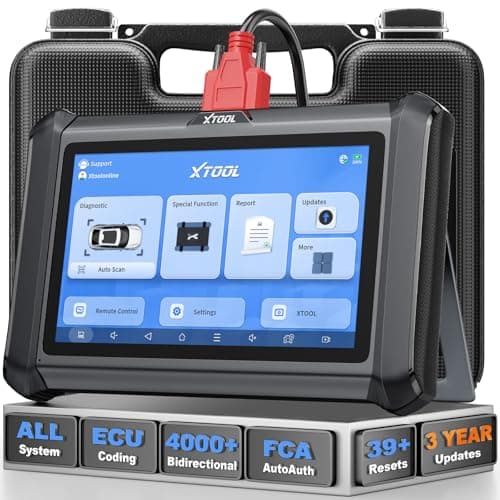
XTOOL D7S: CAN FD for newer GM, crankshaft relearn
 See price on AmazonAmazon
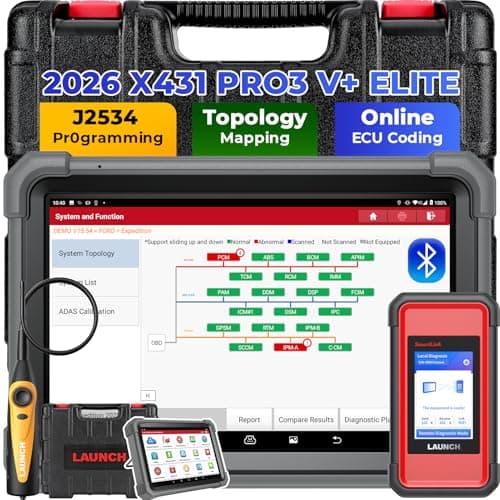
Launch X431 PRO3 V+ Elite: J2534 and 10.1 in Gorilla Glass
From Best professional diagnostic tablets for a home garage or small shop