- System
- Powertrain
- Type
- Generic (SAE)
- Subsystem
- Ignition system or misfire
- Urgency
- Stop driving
Trouble code
P0301 code: Cylinder 1 misfire detected (also P0302-P0306)
Published
Short answer
P0301 means the engine computer detected misfires in cylinder 1. The same code family covers other cylinders: the last digit is the cylinder number, so P0302 is cylinder 2, P0303 is cylinder 3, and so on. The usual causes are a worn spark plug, a failing ignition coil or plug wire, a bad fuel injector, or low compression. A swap test quickly shows whether the problem follows a part.
Scan tools that read P0301 and more
All 7 picks compared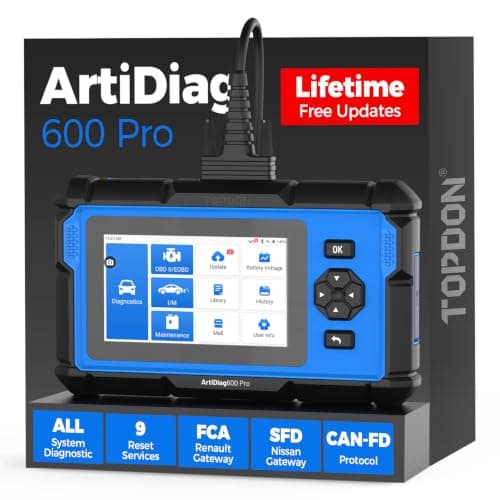
TOPDON ArtiDiag600 Pro: all systems, 9 services
See price on AmazonSee it on Amazon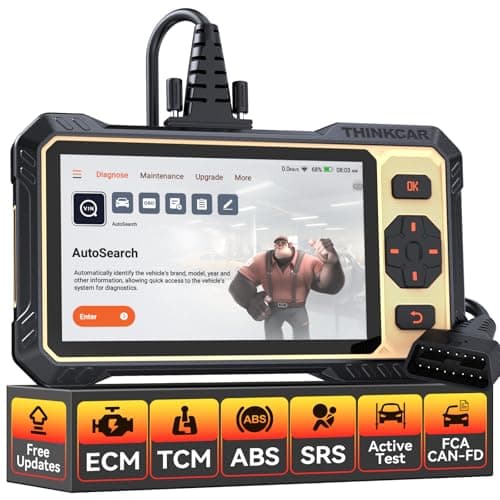
THINKCAR THINKSCAN 662: active tests under $200
See price on AmazonSee it on Amazon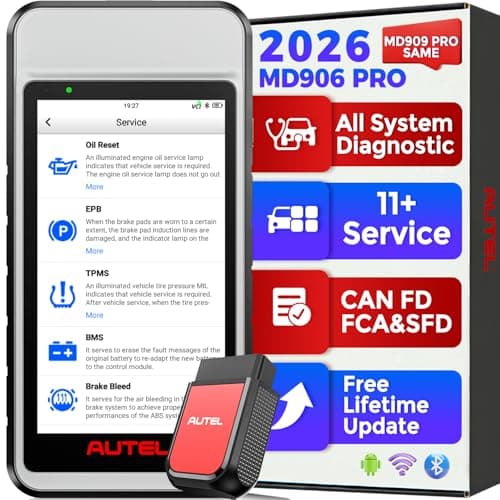
Autel MaxiDiag MD906 PRO: all systems, 11 services
See price on AmazonSee it on Amazon
This page covers all cylinder-specific misfire codes, P0301 through P0306, and also applies to P0307 and P0308 on engines with more cylinders. It is for drivers and DIY mechanics who want to find the cause of a single-cylinder misfire without guessing. You will learn how to read the code, the symptoms, a table of causes from cheapest and most likely, the swap test that saves money, and when the misfire is serious enough to stop driving.
What P0301 means
P0301 is the generic SAE code for Cylinder 1 Misfire Detected. The PCM watches crankshaft speed. Each time a cylinder fires, the crankshaft speeds up a little. When one cylinder does not fire properly, the crank slows down at that point, and the PCM counts it as a misfire. When the count passes a threshold, it sets a code for that cylinder.
In the P030X family, the last digit is the cylinder number. P0301 is cylinder 1, P0302 is cylinder 2, P0303 is cylinder 3, P0304 is cylinder 4, P0305 is cylinder 5 and P0306 is cylinder 6. Engines with more cylinders can set P0307 and P0308. P0300 is different: it means random or multiple cylinder misfires. Cylinder numbering is not the same on every engine, especially V engines, so check the service information for your vehicle before you start pulling coils.
P powertrain, B body, C chassis, U network
0 generic (same on every car), 1 set by the maker
For P codes: 4 means auxiliary emission controls
The exact fault: here, catalyst efficiency, bank 1
Symptoms of a cylinder misfire
A flashing check engine light means the misfire is severe enough to damage the catalytic converter. Unburned fuel goes into the exhaust and overheats the converter. Read solid vs flashing check engine light for what each state means.
- Check engine light on, or flashing during a severe misfire
- Rough idle or shaking at a stop
- Hesitation, stumble or loss of power when accelerating
- Poor fuel economy
- Smell of raw fuel from the exhaust in some cases
Note.If the check engine light is flashing, reduce speed and load right away and avoid driving the car until the misfire is fixed.
Common causes of P0301 to P0306
Ignition parts fail most often, and they are the easiest to test. Work down the table in order.
| Cause | How to check | Typical fix |
|---|---|---|
| Worn or fouled spark plug | Remove and inspect: worn electrode, cracks, oil or carbon fouling; swap test | Replace plugs, usually as a set |
| Failing ignition coil or coil boot | Swap the coil to another cylinder and see if the misfire moves | Replace the coil or boot |
| Bad spark plug wire (older engines) | Inspect for cracks and burns; swap the wire | Replace the wire set |
| Damaged connector or wiring to the coil or injector | Inspect for broken locks, corrosion or chafed wires | Repair the connector or wiring |
| Clogged or failed fuel injector | Swap the injector or test it per the service information | Clean or replace the injector |
| Vacuum leak near that cylinder | Smoke test the intake; check the intake gasket on that runner | Replace the gasket or hose |
| Low compression (valve, rings, head gasket) | Compression test and leak-down test | Engine repair; get a professional opinion |
How to diagnose P0301: the swap test
The swap test tells you whether the fault follows a part. It costs nothing except time and works on most coil-on-plug engines.
- 1
Read all codes and save the freeze frame data. Note if the misfire happened at idle, under load, cold or hot. Look for other codes such as P0171 that point to a lean condition.
- 2
Check live misfire counters if your scanner shows them (often in Mode 6 or a misfire data screen) to confirm which cylinder is missing.
- 3
Swap the ignition coil from the misfiring cylinder with the coil from a cylinder that is not misfiring. Clear codes and drive under the same conditions.
- 4
If the code moves to the other cylinder (for example P0301 becomes P0303), the coil is bad. If it stays on cylinder 1, the coil is fine.
- 5
Pull the spark plug and inspect it. Swap it with another cylinder or replace the set if it is worn.
- 6
If the misfire still stays on the same cylinder, check the injector (swap it or test it) and look for a vacuum leak at that cylinder.
- 7
If ignition and fuel check out, run a compression test. Low compression in one cylinder points to a mechanical problem that needs a professional.
How to fix it
Replace only the part the testing points to. A coil that moves the misfire gets replaced. Worn plugs are normally replaced as a full set, using the plug type and gap the manufacturer lists. Injector problems may need cleaning or replacement. Low compression is an engine repair and needs a proper diagnosis before any money is spent.
After the repair, clear the code, drive under the conditions that caused the misfire, and recheck the misfire counters. If a flashing light was ignored for a long time, the catalytic converter may already be damaged and can later set P0420.
Can you drive with P0301?
Not for long. With a steady check engine light and a light misfire, you can usually drive carefully to a shop or home to do the swap test. With a flashing light, stop driving as soon as it is safe. Continued misfiring can overheat and destroy the catalytic converter, which is a much more expensive repair than a coil or spark plug. Read can you drive with the check engine light on for more.
Related codes
P0300 is a random or multiple misfire. P0171 and P0174 are lean codes that can cause misfires. P0420 may follow long-term misfiring. P0335 and P0340 are crankshaft and camshaft sensor codes that can affect misfire detection. Look up anything else in the code decoder.
Frequently asked questions
What does the last digit in P0301 mean? It is the cylinder number. P0301 is cylinder 1, P0302 is cylinder 2, up to P0306 for cylinder 6 and beyond on larger engines. Check the service information to find which cylinder is number 1 on your engine.
Is P0301 usually a coil or a spark plug? On many modern engines it is one of those two. The swap test shows which: if the misfire follows the coil, replace the coil; if it follows the plug, replace the plugs.
Can a misfire fix itself? The light may go off if the misfire stops, but the cause is usually still there. Worn plugs and weak coils get worse over time, so diagnose it while the code is fresh.
Will a misfire damage the catalytic converter? A severe or long-lasting misfire can. Unburned fuel overheats the converter, which is why a flashing check engine light means stop driving.
What you need for this
- See price on AmazonAmazon
TOPDON ArtiDiag600 Pro: all systems, 9 services
From Best OBD2 scanners for DIY mechanics who fix their own cars
 See price on AmazonAmazon
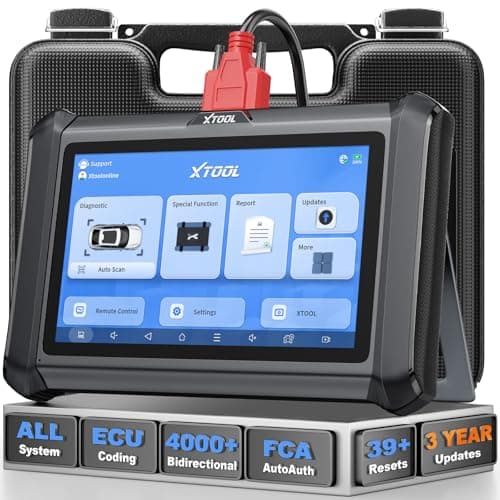
XTOOL D7S: CAN FD for newer GM, crankshaft relearn
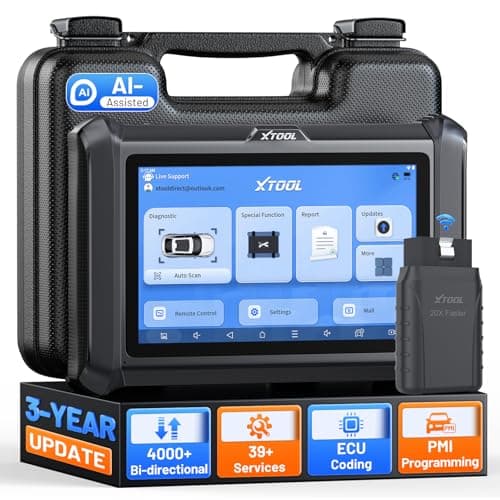 See price on AmazonAmazon
XTOOL D7W: WiFi VCI, 4000+ active tests