Comparison
OBD2 scanner vs code reader: what the difference means for you
Published
Short answer
A code reader reads and clears engine trouble codes and usually shows readiness monitors. An OBD2 scanner adds live sensor data, freeze frame, and often access to other systems like ABS, airbags and transmission. A bidirectional scanner goes further and can command parts to run for active tests. If you only want to know why the check engine light is on, a code reader works. To diagnose and fix, get a scanner.
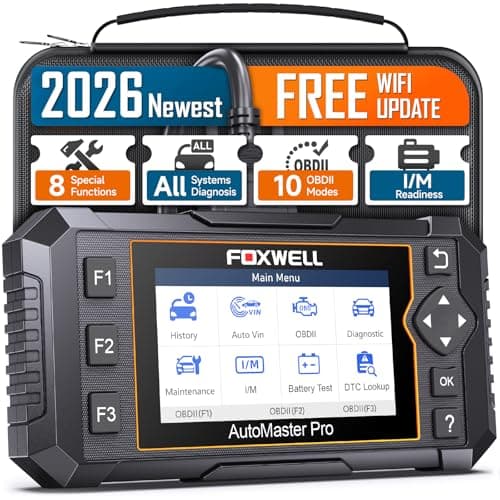
FOXWELL
FOXWELL NT624 Elite: all systems, 8 resets
See price on Amazon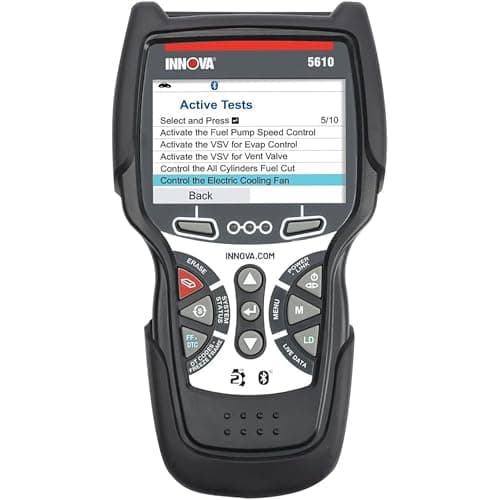
Innova
Innova 5610: simple bidirectional tool, no fees
See price on Amazon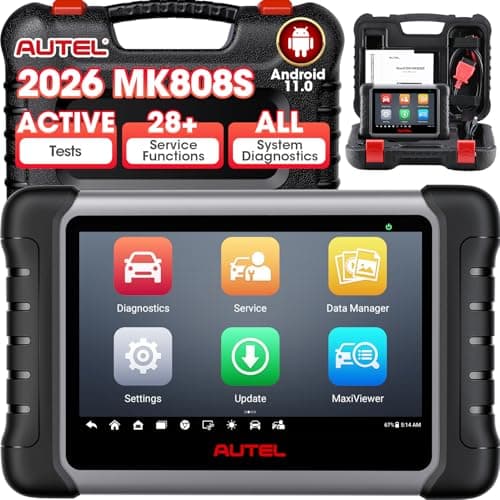
Autel
MaxiCOM MK808S: bidirectional, 28+ services
See price on Amazon
- FOXWELL NT624 Elite: all systems, 8 resets
- Systems
- All systems
- Service functions
- 8
- Active tests
- Not stated
- Stated updates
- Lifetime free via WiFi
- Innova 5610: simple bidirectional tool, no fees
- Systems
- -
- Service functions
- Special Reset Function (count not stated)
- Active tests
- Yes, e.g. fuel pump, EPB retract
- Stated updates
- Free, no subscription fees
- MaxiCOM MK808S: bidirectional, 28+ services
- Systems
- All systems
- Service functions
- 28+
- Active tests
- Yes, OE-level
- Stated updates
- -
| Pick | Systems | Service functions | Active tests | Stated updates | Price | Link |
|---|---|---|---|---|---|---|
| FOXWELL NT624 Elite: all systems, 8 resets | All systems | 8 | Not stated | Lifetime free via WiFi | - | Amazon |
| Innova 5610: simple bidirectional tool, no fees | - | Special Reset Function (count not stated) | Yes, e.g. fuel pump, EPB retract | Free, no subscription fees | - | Amazon |
| MaxiCOM MK808S: bidirectional, 28+ services | All systems | 28+ | Yes, OE-level | - | - | Amazon |
Facts are taken from each Amazon listing. Prices are checked daily and shown with their date.
Verdict
For most DIY mechanics, an all system OBD2 scanner with live data is the right level. Buy a basic code reader only if you just want the code before going to a shop, and step up to a bidirectional scanner if you test parts or bleed ABS brakes.
This page is for drivers and DIY mechanics who keep seeing the terms code reader, scanner, scan tool and bidirectional tool and want to know what they actually get for the money. We explain what each type does, show a side by side table, cover where phone apps and plug in dongles fit, and help you pick the level that matches the work you plan to do. The terms are used loosely by sellers, so we focus on the functions to look for rather than the label on the box.
Code reader: read and clear engine codes
A code reader is the simplest tool. It plugs into the OBD2 port under the dash, reads the diagnostic trouble codes stored by the engine computer, shows a short definition and lets you clear them, which turns off the check engine light until the fault returns. Most also show readiness monitors, the self tests that must be complete for an emissions inspection.
That covers the generic engine and emissions side of OBD2 that every 1996 and newer US car must support. A code reader tells you, for example, that you have P0420 or P0171. It does not tell you why. To find out whether P0171 is a vacuum leak or a weak fuel pump, you need to see sensor data, and most basic code readers do not show much of it. See how to read OBD2 codes for what each part of a code means.
P powertrain, B body, C chassis, U network
0 generic (same on every car), 1 set by the maker
For P codes: 4 means auxiliary emission controls
The exact fault: here, catalyst efficiency, bank 1
OBD2 scanner: live data, freeze frame and more systems
An OBD2 scanner, or scan tool, does everything a code reader does and adds the information you need to diagnose. The key extra is live data: real time readings like coolant temperature, engine speed, fuel trims, oxygen sensor voltage and airflow. Scanners also show freeze frame, the snapshot of conditions the computer saved when a code set, and many can graph and record data to catch intermittent problems.
Better scanners read more systems than the engine. Four system tools add transmission, ABS and airbag (SRS). All system or full system tools reach body, climate, steering, TPMS and other modules using each maker's enhanced codes, and often include service resets like oil life, electronic parking brake and steering angle. Learn to use the data in freeze frame data explained and fuel trims explained.
Bidirectional scanner: active tests
A bidirectional scanner can send commands, not just listen. It can turn on a fuel pump, cycle the cooling fan, open an EVAP purge valve, pulse an ABS pump for brake bleeding or move a throttle body. These active tests let you check whether a part and its wiring respond before you replace anything. If the fan runs when commanded, the fan and its relay are likely fine and the problem is in the sensor or logic that should turn it on.
Bidirectional tools cost more, but they save time and parts on real repairs. Read our explainer, what is a bidirectional scan tool, for what these tests can and cannot prove.
Side by side comparison
Sellers use these names loosely. Some tools sold as code readers show live data, and some called scanners only cover the engine. Check the function list rather than the product name.
| Function | Code reader | OBD2 scanner | Bidirectional scanner |
|---|---|---|---|
| Read and clear engine codes | Yes | Yes | Yes |
| Readiness monitors | Usually | Yes | Yes |
| Freeze frame | Sometimes | Yes | Yes |
| Live sensor data | Limited or none | Yes, often with graphs | Yes, often with graphs |
| ABS, airbag, transmission codes | No | Often, on 4-system and all system tools | Yes, usually all systems |
| Service resets | No | Often a few | Usually many |
| Active tests (command parts) | No | No | Yes |
| ECU coding | No | No | On some higher end tools |
Where phone apps and dongles fit
Bluetooth dongles that pair with a phone app, including subscription based products such as FIXD, sit somewhere between a code reader and a scanner. The basic function is reading and clearing engine codes, and many apps show some live data. What you get beyond that depends on the app and often on a paid plan, so check whether ABS, airbag or other systems are included and what the ongoing cost is.
If you like the phone or tablet format but want full system access, there are wireless scan tools with their own apps or tablets. Our wireless and Bluetooth scan tool guide covers those. Also read scan tool updates and subscriptions before you commit to any tool with a yearly fee.
Which one should you buy?
Our picks for each level are in the best OBD2 scanner for DIY mechanics guide and the ABS and SRS scanner guide. Examples from those guides include the Foxwell NT624 Elite, an all system scanner with 8 listed resets, and bidirectional tools such as the Innova 5610 and Autel MK808S. Once you have a tool, our guide on how to use an OBD2 scanner covers the basics.
- Code reader: you want to know why the check engine light is on, check readiness before an inspection, and leave repairs to a shop.
- All system scanner: you do your own repairs and want live data, freeze frame, ABS and airbag codes, and common service resets. This is the sweet spot for most DIY mechanics.
- Bidirectional scanner: you diagnose problems beyond the engine, bleed ABS brakes, or want to test parts before buying them.
Frequently asked questions
Is a code reader enough to fix my car? It is enough to learn the code. To find the cause, you usually need live data and freeze frame, which means a scanner.
Can a code reader turn off the check engine light? Yes. Clearing the code turns the light off, but it comes back if the fault is still there. Clearing also resets readiness monitors, so do not clear codes right before an emissions test. See how to clear the check engine light.
Do I need a bidirectional scanner for DIY work? Not always. It is most useful for ABS brake bleeding, EVAP tests and checking pumps, fans and solenoids. If you only do maintenance and engine codes, an all system scanner is usually enough.
Will a code reader read ABS or airbag lights? Usually not. Basic readers cover the engine and emissions system. ABS and SRS codes need a scanner that lists those systems.
What you need for this
 See price on AmazonAmazon
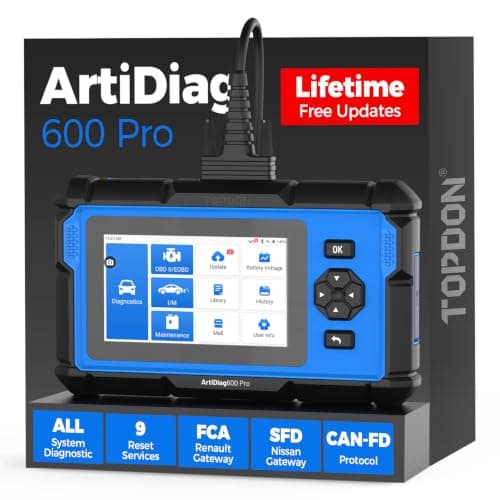
TOPDON ArtiDiag600 Pro: all systems, 9 services
From Best OBD2 scanners for DIY mechanics who fix their own cars
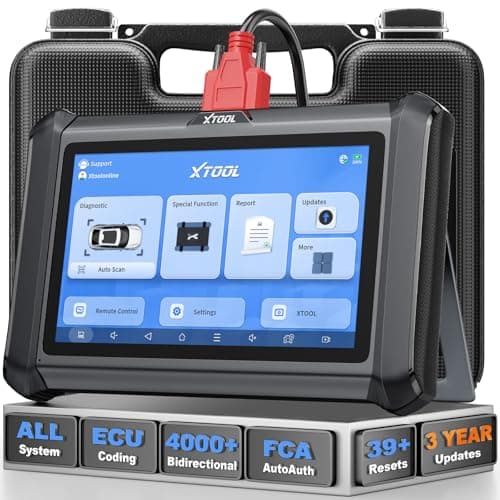 See price on AmazonAmazon
XTOOL D7S: CAN FD for newer GM, crankshaft relearn
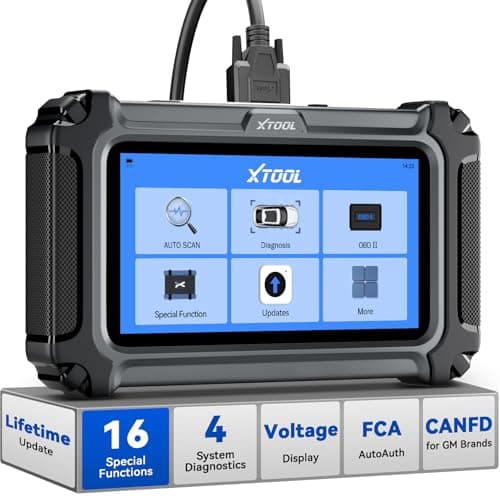 See price on AmazonAmazon
XTOOL D5S: 4 systems and 16 resets
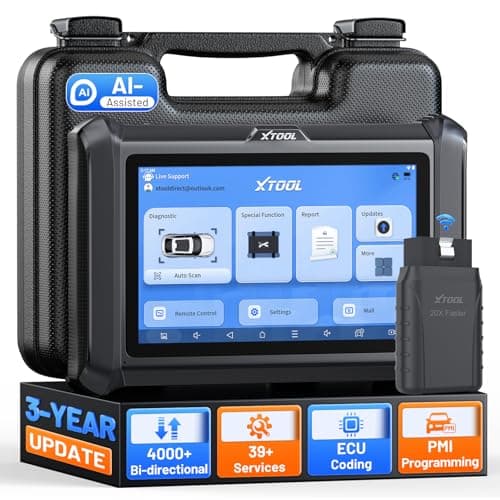 See price on AmazonAmazon
XTOOL D7W: WiFi VCI, 4000+ active tests