- System
- Powertrain
- Type
- Generic (SAE)
- Subsystem
- Auxiliary emission controls (EGR, EVAP, catalyst, secondary air)
- Urgency
- Fix soon
Trouble code
P0420 vs P0430: bank 1 and bank 2 catalyst codes
Published
Short answer
P0420 and P0430 mean the same thing: the catalytic converter is not storing oxygen well enough to clean the exhaust. P0420 points to bank 1, the side of the engine with cylinder 1. P0430 points to bank 2, the other side, so it only appears on V6, V8 and other engines with two banks. The causes and diagnosis are the same, you just check the sensors and converter on the other side.
Scan tools that read P0430 and more
All 7 picks compared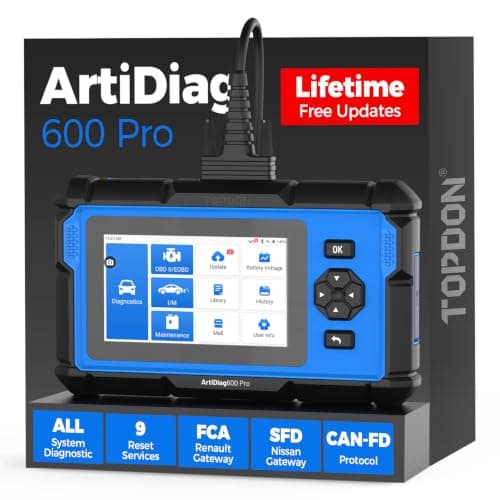
TOPDON ArtiDiag600 Pro: all systems, 9 services
See price on AmazonSee it on Amazon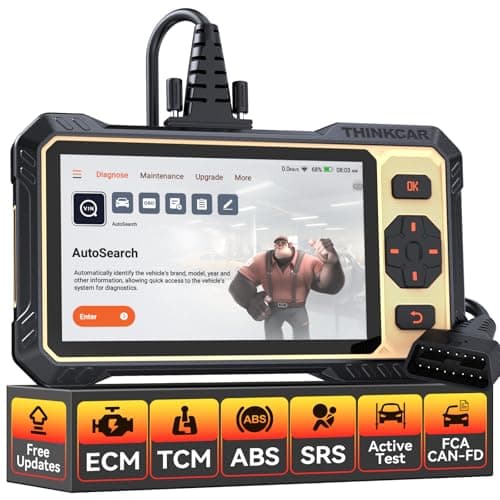
THINKCAR THINKSCAN 662: active tests under $200
See price on AmazonSee it on Amazon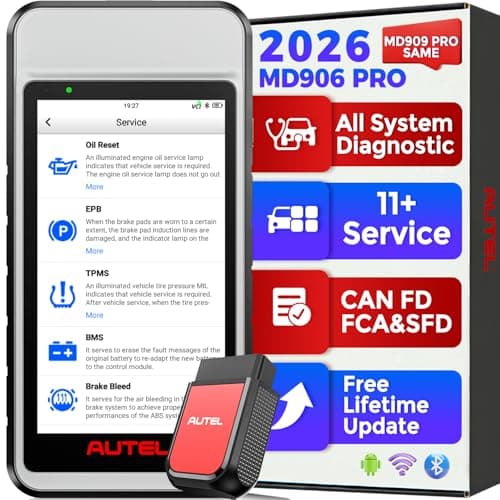
Autel MaxiDiag MD906 PRO: all systems, 11 services
See price on AmazonSee it on Amazon
This page is for drivers and DIY mechanics who pulled P0420, P0430 or both and want to know how the two codes differ. We explain what bank 1 and bank 2 mean, how to find each bank on your engine, why one or both codes set, and what to check before replacing a converter. For the full repair walk through of the bank 1 code, see our P0420 code guide. Everything there applies to P0430 on the bank 2 side.
What P0420 and P0430 mean
Both are generic SAE J2012 powertrain codes. P0420 is Catalyst System Efficiency Below Threshold (Bank 1). P0430 is Catalyst System Efficiency Below Threshold (Bank 2). The engine computer sets them when it judges that a catalytic converter is no longer storing and releasing oxygen well enough to clean the exhaust.
It makes that judgment by comparing the upstream oxygen sensor, before the converter, with the downstream sensor after it. A working converter evens out the oxygen content, so the downstream signal stays fairly steady while the upstream signal switches rich and lean. When the downstream sensor starts to mirror the upstream one, the computer decides the converter has lost efficiency and sets the code for that bank. You can check the exact wording of any code with our code decoder.
P powertrain, B body, C chassis, U network
0 generic (same on every car), 1 set by the maker
For P codes: 4 means auxiliary emission controls
The exact fault: here, catalyst efficiency, bank 1
Bank 1 vs bank 2: how to tell them apart
A bank is one side of the engine's cylinders. Bank 1 is always the side that contains cylinder number 1. Bank 2 is the opposite side. Inline 4 and inline 6 engines have only one bank, so they can set P0420 but not P0430. V6, V8 and flat engines have two banks, each with its own exhaust manifold and, on most vehicles, its own catalytic converter and set of oxygen sensors.
Which side is bank 1 varies by manufacturer and by how the engine sits in the car. On a transverse V6 in a front wheel drive car, bank 1 may be toward the firewall or toward the radiator. On a rear wheel drive truck it may be the driver or passenger side. Do not guess. Check the cylinder numbering in the service information for your engine before you test or replace parts.
| P0420 | P0430 | |
|---|---|---|
| Definition | Catalyst efficiency below threshold, bank 1 | Catalyst efficiency below threshold, bank 2 |
| Engine side | Side with cylinder 1 | Side opposite cylinder 1 |
| Engines that can set it | All, including inline 4 and 6 | Only engines with two banks (V6, V8, flat) |
| Sensors involved | Bank 1 upstream and downstream O2 | Bank 2 upstream and downstream O2 |
| Typical urgency | Fix soon | Fix soon |
Common causes of either code
The causes are the same for both banks. Check the cheapest and most likely items first, and only condemn the converter once the rest checks out.
- Exhaust leak near the upstream or downstream O2 sensor, which lets outside air skew the readings.
- Slow or failing downstream O2 sensor, or a non OEM sensor with the wrong response.
- Misfire or rich running that has overheated or coated the converter. Look for misfire codes such as P0300 and fuel trim codes such as P0172.
- Oil or coolant consumption that contaminates the catalyst over time.
- Worn out catalytic converter, common on high mileage vehicles.
- Software issue on some vehicles, where the maker has released an updated calibration. Check for service bulletins for your vehicle.
When you get both P0420 and P0430
If both codes appear together, look for something that affects the whole engine rather than one side. Long term misfires, a rich fuel condition, oil burning, coolant entering the combustion chamber or high mileage can wear both converters at once. A fuel or engine management problem that runs both banks rich will often show in the fuel trims of both banks. See fuel trims explained for how to read them.
If only one code sets, focus on that side. A single bank code points more toward an exhaust leak, a sensor or a converter problem on that bank. Comparing bank 1 and bank 2 live data side by side is one of the most useful checks, because the healthy bank shows you what normal looks like on the same engine.
How to diagnose P0430 (or P0420)
- 1
Scan all codes and save the freeze frame. Fix any misfire, fuel trim or O2 sensor heater codes first. See freeze frame data explained.
- 2
Identify bank 1 and bank 2 for your engine in the service information.
- 3
Inspect the exhaust on the affected bank for leaks, cracked manifolds, loose flanges and damaged sensor wiring.
- 4
Warm the engine fully and watch upstream and downstream O2 sensor data for the affected bank with a scanner. A steady downstream signal with a switching upstream signal suggests a working converter.
- 5
Compare with the other bank on two bank engines.
- 6
Check for service bulletins or software updates for your vehicle.
- 7
Replace the converter only after the steps above, and use one that is legal for your state.
Note.Exhaust parts get extremely hot. Let the system cool before touching sensors or converters, and support the vehicle on jack stands, never only a jack, if you work underneath.
Can you drive with P0420 or P0430?
Usually yes, for a while. A catalyst efficiency code on its own does not normally change how the car drives, and the check engine light should be solid, not flashing. The car will fail an emissions inspection, and a converter that is breaking up inside can eventually restrict exhaust flow. If the light is flashing, that means an active misfire that can damage the converter, so stop driving soon. See check engine light solid vs flashing and can you drive with the check engine light on.
After a repair, clear the code and complete a drive cycle so the catalyst monitor can run and confirm the fix. Our drive cycle guide explains how.
Frequently asked questions
Is P0430 worse than P0420? No. They are the same fault on different banks. Severity depends on the cause, not on the bank number.
Can a 4-cylinder car get P0430? Generally no. Inline engines have only one bank, so a catalyst efficiency fault shows as P0420.
Will replacing the O2 sensor fix P0430? Only if the sensor is the cause. Check live data and exhaust leaks first. A new sensor will not fix a worn converter.
Should I replace both converters if I only have P0430? Not by default. Diagnose the bank 2 side first. If both banks show signs of failure, or the cause affects the whole engine, you may need both.
What you need for this
- See price on AmazonAmazon
TOPDON ArtiDiag600 Pro: all systems, 9 services
From Best OBD2 scanners for DIY mechanics who fix their own cars
 See price on AmazonAmazon
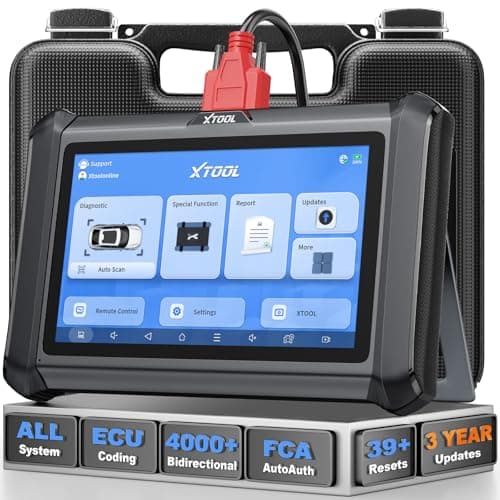
XTOOL D7S: CAN FD for newer GM, crankshaft relearn
 See price on AmazonAmazon
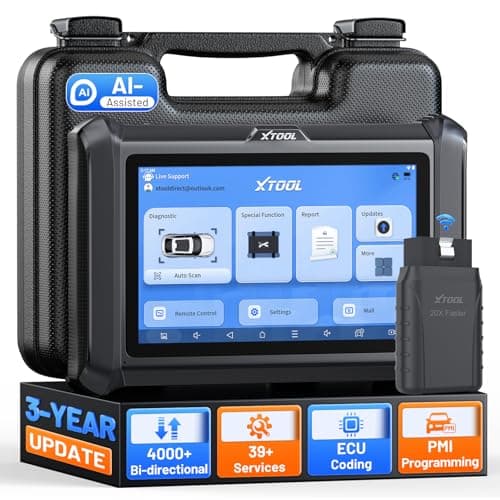
XTOOL D7W: WiFi VCI, 4000+ active tests