Fix
Check engine light on but the car runs fine
Published
Short answer
A check engine light with no drivability symptoms usually points to an emissions or sensor fault, not a mechanical one. Common causes are a loose gas cap, a small EVAP leak, an oxygen sensor heater fault, a thermostat stuck open, or early catalytic converter efficiency codes. Read the code to know for sure. Most of these are fine to drive on short term, but they can fail an inspection and some get worse over time.
Tools for this job
All 7 picks compared
TOPDON ArtiDiag600 Pro: all systems, 9 services
See price on AmazonSee it on Amazon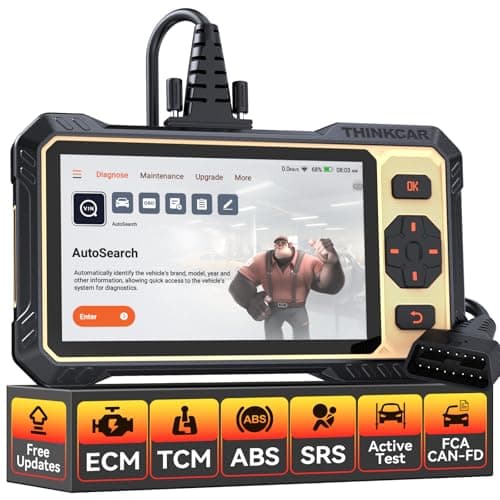
THINKCAR THINKSCAN 662: active tests under $200
See price on AmazonSee it on Amazon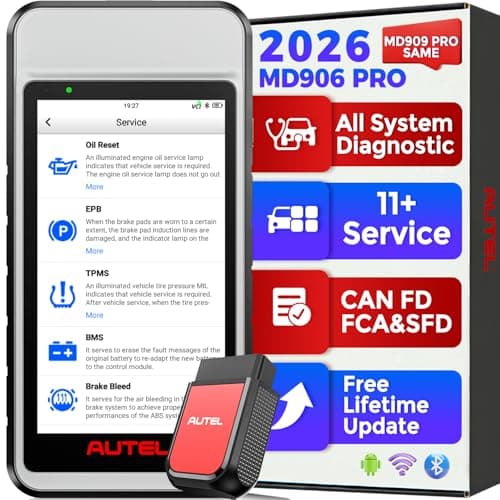
Autel MaxiDiag MD906 PRO: all systems, 11 services
See price on AmazonSee it on Amazon
This page is for drivers whose check engine light is on while the car starts, idles and drives exactly as it always has. That combination is common, and it often means the fault is in a system you cannot feel from the driver seat, such as the evaporative emissions system or a sensor heater. Below you will find the usual suspects, a quick way to confirm which one you have, and a clear line between faults that can wait a little and ones that should not.
Why the light comes on when nothing feels wrong
The OBD2 system is built to catch emissions problems before they become drivability problems. Many of its self tests watch parts that have no effect on power or smoothness. The EVAP system, for example, only handles fuel vapor. A leak there raises emissions but does not change how the engine runs. Oxygen sensor heaters, catalyst efficiency and some thermostat tests are similar.
The computer also corrects small problems on its own. If a vacuum leak lets in extra air, it adds fuel to compensate. You may feel nothing until the correction runs out of range and a lean code sets. So no symptoms does not always mean no problem. It means the problem is small or in a system you cannot feel.
Common causes with no symptoms
Gas cap and EVAP codes are the most common no symptom faults. Start with the P0455 and P0456 guides if you see those. A stuck open thermostat (P0128) often shows up as weak cabin heat in winter and a temperature gauge that reads low. Catalyst codes like P0420 frequently come with no symptoms at all.
| Cause | Typical codes | Fix soon? |
|---|---|---|
| Loose or bad gas cap | P0455, P0456, P0457 | Easy fix, check right away |
| Small EVAP leak, purge or vent valve | P0442, P0446, P0456, P0496 | Fix before inspection |
| Oxygen sensor heater circuit | P0135, P0141 | Fix soon, can affect fuel economy |
| Thermostat stuck open | P0128 | Fix soon, poor heat and mileage |
| Catalyst efficiency | P0420, P0430 | Find the root cause |
| Early lean condition | P0171, P0174 | Fix soon before it gets worse |
| EGR flow low | P0401 | Fix before inspection |
How to diagnose it at home
The code reading guide explains what each character in the code means, and the fuel trims explainer shows how to tell if the engine is compensating for a leak. A scanner with live data and freeze frame makes this much easier than a basic code reader.
- 1
Check that the light is solid, not flashing. A flashing light is a misfire and is not a runs fine situation.
- 2
Plug in an OBD2 scanner and read all stored and pending codes.
- 3
Save the freeze frame data so you know when the fault happened.
- 4
Look at the gas cap first if the code is EVAP related: check the seal and tighten until it clicks.
- 5
For lean or sensor codes, look at live data such as fuel trims and oxygen sensor readings.
- 6
Check readiness monitors to see which tests have completed.
When it is fine to wait and when it is not
A loose gas cap or a small EVAP leak will not hurt the engine. You can fix it when convenient, but it will fail an emissions inspection in states that test with OBD2. An oxygen sensor heater or thermostat fault can lower fuel economy and should be fixed soon.
Some quiet faults lead to bigger ones. A lean condition can grow into misfires. Ignored misfires can overheat and damage the catalytic converter. A catalyst code can be a sign of oil burning or a coolant leak into the cylinders. Reading the code and freeze frame helps you know which group you are in.
Note.While the light is on for one fault, it cannot warn you about a new one. That is another reason not to leave it on for months.
After the repair: clearing the light
Once you fix the cause, you can clear the code with your scanner or let the computer turn the light off after enough good drives. Clearing resets the readiness monitors, so the car needs normal driving before it is ready for inspection. See how to clear the check engine light and drive cycle after clearing codes for what to expect.
If the light comes back with the same code, the root cause is still there. Go back to the freeze frame and live data before replacing more parts.
Frequently asked questions
Can I pass inspection with the check engine light on if the car runs fine? In states with OBD2 based inspection, a lit check engine light usually means an automatic fail, regardless of how the car drives.
Why did my check engine light turn off by itself? The fault stopped showing up for several drives in a row, so the computer turned the lamp off. The code may remain in history. This is common with gas cap codes.
Is a solid check engine light an emergency? Usually not, if gauges are normal and the car drives well. Read the code soon. A flashing light or warning gauges are a reason to stop.
Can a weak battery turn on the check engine light? Low voltage can cause communication or sensor codes on some vehicles. If you see several unrelated codes at once, test the battery and charging system first.
What you need for this
- See price on AmazonAmazon
TOPDON ArtiDiag600 Pro: all systems, 9 services
From Best OBD2 scanners for DIY mechanics who fix their own cars
 See price on AmazonAmazon
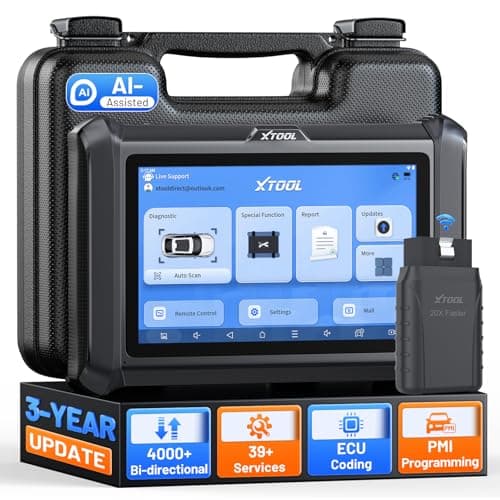
XTOOL D7W: WiFi VCI, 4000+ active tests
 See price on AmazonAmazon
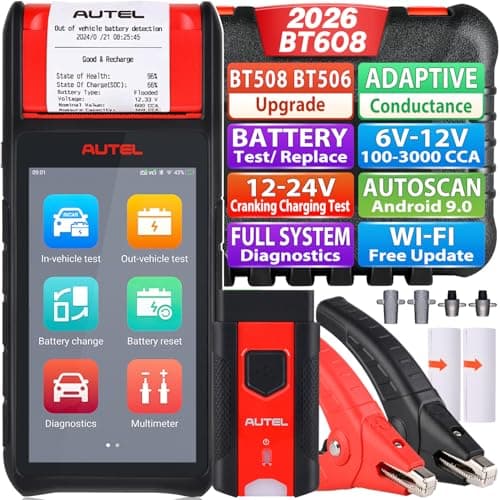
Autel BT608 (E): 100-3000 CCA plus full-system scan