How-to
Where is the OBD2 port? Finding the 16-pin connector
Published
Short answer
On most cars and light trucks, the OBD2 port is under the dashboard on the driver side, near or just left of the steering column. It is a trapezoid-shaped 16-pin connector. Sometimes it sits behind a small cover, near the fuse panel, or in the center console area. Your owner's manual usually shows the exact location.
Tools for this job
All 7 picks compared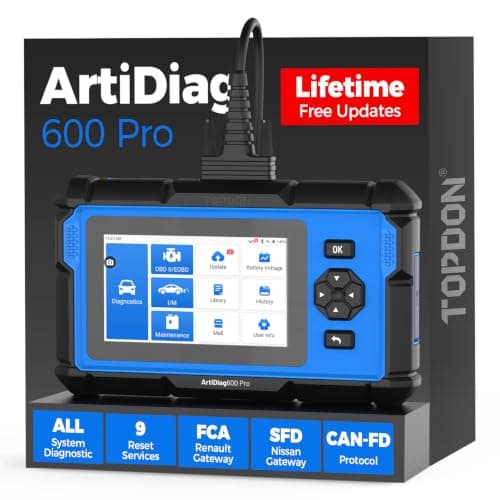
TOPDON ArtiDiag600 Pro: all systems, 9 services
See price on AmazonSee it on Amazon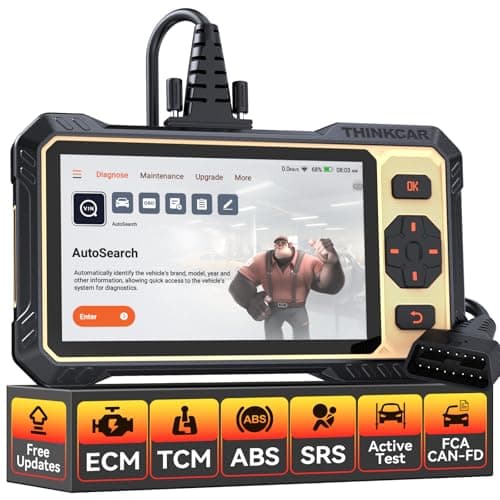
THINKCAR THINKSCAN 662: active tests under $200
See price on AmazonSee it on Amazon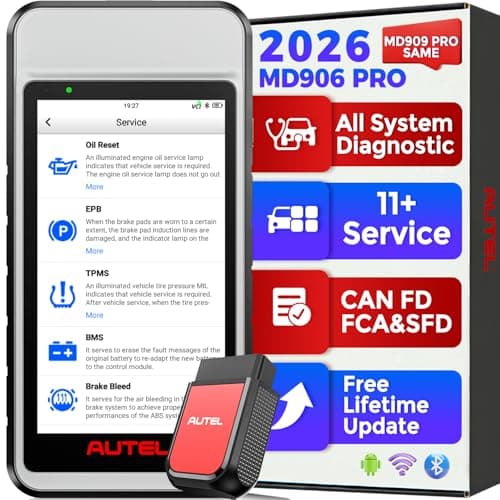
Autel MaxiDiag MD906 PRO: all systems, 11 services
See price on AmazonSee it on Amazon
You bought a scanner and now you are lying in the footwell looking for the plug. This page shows where the OBD2 port usually is, what it looks like, the less common spots carmakers use, and what each pin does. It also covers what to check if you find the port but your scanner will not power up. It applies to gasoline cars and light trucks sold in the US from the 1996 model year on.
What the OBD2 port looks like
The OBD2 diagnostic connector is standardized under SAE J1962. It is a 16-pin female socket shaped like a trapezoid, wider at the top than the bottom, with two rows of eight pins. It is usually black, though some are other colors. The shape means your scanner plug only fits one way.
The standard calls for the connector to be in the driver's area and reachable without tools. That is why it is nearly always somewhere under or near the driver's side of the dash, though carmakers have some freedom in exact placement.
- Pin 4
- Chassis ground
- Pin 5
- Signal ground
- Pin 6
- CAN high
- Pin 14
- CAN low
- Pin 16
- Battery +12 V
Common OBD2 port locations
Check these spots in order. Use a flashlight and look up from the footwell, since the port often faces down.
| Location | How common | Tip |
|---|---|---|
| Under dash, driver side near column | Most vehicles | Look up from the footwell with a light |
| Behind a small cover | Some vehicles | Look for a clip-off panel or label |
| Near the fuse panel | Some vehicles | Open the fuse cover on the dash end or lower panel |
| Center console area | Less common | Check under trays and around the shifter |
- Under the dash, left of the steering column, above the pedals (most common)
- Under the dash, right of the steering column, near the center
- Behind a small cover or panel in the lower dash, sometimes labeled OBD or diagnostic
- Near the fuse panel on the driver side, or behind the fuse panel door
- In the center console area, near the shifter or under a storage tray
- Near the driver's kick panel by the door hinge
Step by step: find the port and plug in
If you still cannot find it, check your owner's manual index under diagnostic connector or data link connector. Once you find it, how to use an OBD2 scanner walks through the rest.
- 1
Turn the ignition off and open the driver's door for light.
- 2
Look under the dash to the left and right of the steering column with a flashlight.
- 3
Check for small covers or panels in the lower dash and fuse area.
- 4
Check the center console area if you have not found it.
- 5
Line up the scanner plug with the trapezoid shape and push it in fully.
- 6
Turn the ignition on and wait for the scanner to power up and connect.
OBD2 pinout basics
You do not need to know the pinout to use a scanner, but it helps when a tool will not power up or connect. Not every vehicle uses every pin. Which communication pins are used depends on the protocol your vehicle uses.
| Pin | Function |
|---|---|
| 4 | Chassis ground |
| 5 | Signal ground |
| 16 | Battery power (12V) |
| 6 and 14 | CAN high and CAN low |
| 7 (and 15) | ISO 9141 / KWP2000 K-line (and L-line) |
| 2 and 10 | SAE J1850 bus |
Note.Do not jump or probe pins at random. Shorting pin 16 to ground can blow a fuse or damage wiring. Use a test light or meter only if you know what you are doing.
Scanner will not power up at the port
The scanner gets power from pin 16 and ground from pins 4 and 5. If the screen stays dark, the most common cause is a blown fuse. On many vehicles, the OBD2 power shares a fuse with the cigarette lighter or accessory outlet. If the power outlet does not work either, check that fuse first.
If the scanner powers up but will not link, the problem is communication rather than power. Check that the ignition is on, the battery is healthy, and the tool supports your vehicle. Our no-link fix guide covers this in detail. A Bluetooth scan tool uses the same port, so the same checks apply.
Older vehicles and trucks
Vehicles before 1996 often use OBD1, with brand-specific connectors in different places, sometimes under the hood. A standard OBD2 scanner will not plug into those without the right adapter and coverage. See OBD1 vs OBD2.
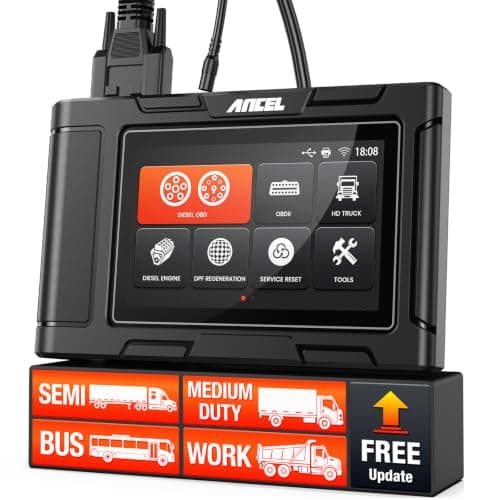
Heavy-duty trucks often use a different, round diagnostic connector and different protocols. If you work on those, see heavy-duty truck scanners. Diesel light trucks generally use the standard OBD2 connector.
Frequently asked questions
Do all cars have an OBD2 port? All gasoline cars and light trucks sold in the US from the 1996 model year on have one. Many earlier vehicles do not.
Can the OBD2 port be under the hood? On OBD2 vehicles it is in the passenger compartment, near the driver. Under-hood diagnostic connectors are usually on older OBD1 vehicles.
Is it safe to leave a device plugged into the OBD2 port? Small dongles are designed for it, but some draw power with the car off. If the car sits for long periods, unplug it.
Why is my OBD2 port loose or damaged? Repeated plugging or a dangling device can stress it. Have damaged pins or a loose mount repaired so tools connect reliably.
What you need for this
- See price on AmazonAmazon
TOPDON ArtiDiag600 Pro: all systems, 9 services
From Best OBD2 scanners for DIY mechanics who fix their own cars
 See price on AmazonAmazon
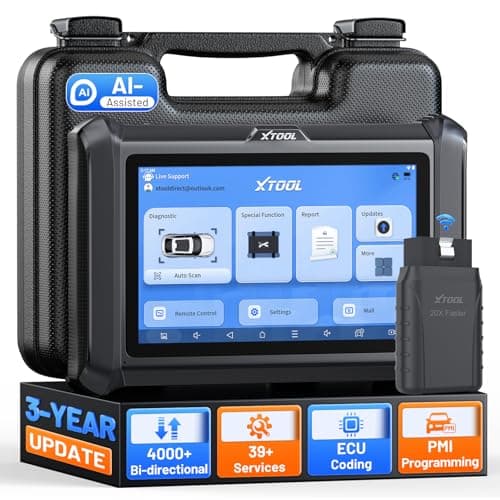
XTOOL D7W: WiFi VCI, 4000+ active tests
 See price on AmazonAmazon
ANCEL HD3400 Pro: DPF regen across 8 engine makes
From Best heavy duty and diesel truck scanners with DPF regen