Explainer
OBD1 vs OBD2: which your car has and which scanner works
Published
Short answer
OBD2 is the standardized system required on cars and light trucks sold in the US from the 1996 model year, with the same 16-pin port and generic code format on every make. OBD1 is the term for the earlier, maker specific systems with different connectors, codes and protocols. A standard OBD2 scanner cannot read OBD1 cars. You need a make specific OBD1 tool, an adapter set with compatible software, or on some models the manual blink code method.
Tools for this job
All 7 picks compared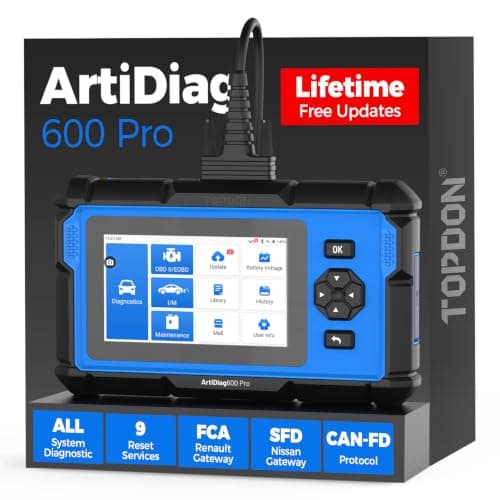
TOPDON ArtiDiag600 Pro: all systems, 9 services
See price on AmazonSee it on Amazon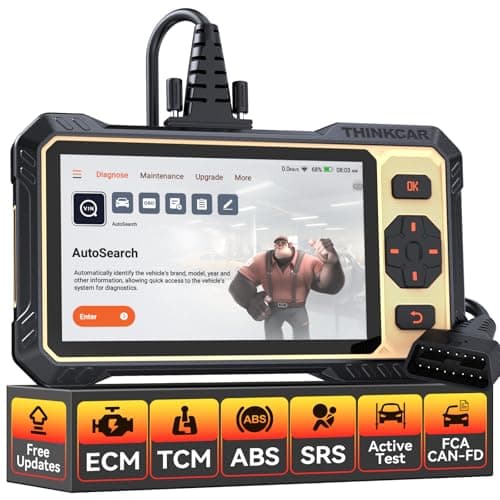
THINKCAR THINKSCAN 662: active tests under $200
See price on AmazonSee it on Amazon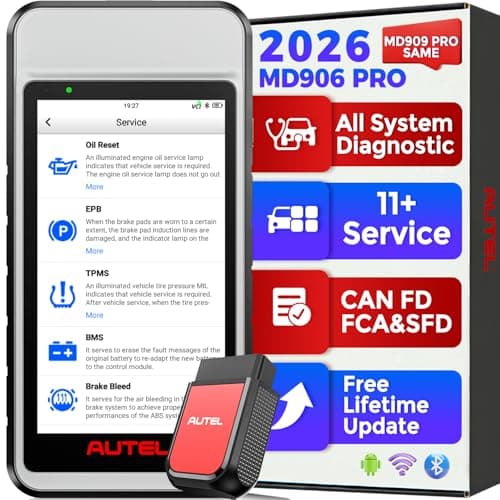
Autel MaxiDiag MD906 PRO: all systems, 11 services
See price on AmazonSee it on Amazon
This page is for owners of older cars, or anyone shopping for a scanner who wants to know if it will work on every vehicle in the driveway. It explains what changed between OBD1 and OBD2, how to tell which system your car has, the transition years where things get confusing, and what to use to read codes on a pre-OBD2 vehicle. If your car is 1996 or newer, any OBD2 scanner will read its engine codes.
What changed from OBD1 to OBD2
Before 1996, carmakers built their own onboard diagnostic systems. Connectors varied in shape and location, codes were often two or three digits with meanings unique to the make, and each brand needed its own tool. These systems are loosely called OBD1, though there was never one OBD1 standard.
OBD2 changed that. It standardized the 16-pin connector (SAE J1962), the five character code format (SAE J2012), a set of communication protocols, required readiness monitors, and a common set of live data values. It also required the system to watch emissions parts much more closely, including catalyst efficiency and misfire detection.
- Pin 4
- Chassis ground
- Pin 5
- Signal ground
- Pin 6
- CAN high
- Pin 14
- CAN low
- Pin 16
- Battery +12 V
| Feature | OBD1 | OBD2 |
|---|---|---|
| Years (US) | Before the 1996 model year | 1996 and newer cars and light trucks |
| Connector | Varies by make, often under hood | Standard 16-pin, under the dash near the driver |
| Code format | Varies, often 2 or 3 digits | Standard letter plus 4 digits, such as P0420 |
| Scanner | Make specific tool or adapter | Any OBD2 scanner reads engine codes |
| Readiness monitors | No standard | Required |
| Live data | Limited, varies | Standard set of parameters |
How to tell which your car has
- 1
Check the model year. 1996 and newer US cars and light trucks are OBD2.
- 2
Look for the 16-pin trapezoid shaped port under the dash within reach of the driver seat. See where is the OBD2 port.
- 3
Open the hood and read the emissions label. OBD2 vehicles usually state OBD II or OBD II certified.
- 4
If the car is 1994 or 1995, do not assume. Some models were early OBD2, some had an OBD2 style port without full OBD2 support, and many were OBD1.
Note.Some 1994 and 1995 vehicles have a 16-pin connector but still use maker specific communication. A port that looks like OBD2 does not guarantee an OBD2 scanner will link.
Can an OBD2 scanner read OBD1?
Not on its own. An OBD2 scanner expects the 16-pin port and OBD2 protocols. Plugging it into an OBD1 car, even with a connector adapter, will usually give a no link error because the computer speaks a different language. If you see that error on a newer car, check the OBD2 scanner no link fix guide instead.
Some professional scan tools support OBD1 for certain makes with an adapter kit and the right software. Check the tool's coverage list for your exact make, model and year before you buy. Do not rely on a cable adapter alone.
Reading codes on an OBD1 car
OBD1 code meanings are not shared between makes. Code 12 or 13 on one brand does not mean the same thing on another. Always use a code list for your exact vehicle.
- Make specific OBD1 tool. Dedicated readers exist for some makes such as older GM, Ford and Chrysler systems.
- Professional scanner with OBD1 adapters. Some higher end tools cover selected OBD1 vehicles with the correct adapter and software.
- Blink codes. Many OBD1 systems can flash codes on the check engine light when you jumper certain terminals or cycle the key in a set pattern. The method differs by make, so use the service manual for your car.
- Shop or specialist. For less common makes, a shop with older equipment may be the simplest option.
Choosing a scanner for a mixed driveway
If all your vehicles are 1996 or newer, any OBD2 scanner reads engine codes. To read ABS, airbag and other modules you need broader coverage, which our best OBD2 scanners for DIY mechanics guide covers. The scanner vs code reader comparison explains what extra features buy you.
If you also own an OBD1 car, check whether a tool lists OBD1 support for that make, or plan on a separate tool or the blink code method. Heavy trucks and motorcycles have their own connectors and standards too. See the heavy duty truck scanner guide and the motorcycle diagnostic scanner guide.
Frequently asked questions
Can an OBD2 scanner read OBD1? Not by itself. OBD1 systems use different connectors and protocols. You need a tool that lists OBD1 support for your make with the right adapter, or a make specific reader.
What year did OBD2 start? It was required on cars and light trucks sold in the US from the 1996 model year. Some models adopted it earlier.
Is there an OBD1 scanner that works on all cars? No single tool covers every OBD1 system, because there was no common standard. Coverage depends on the make and the tool.
Is OBD2 the same as EOBD? EOBD is the European equivalent with the same connector and code format. Most OBD2 scanners read EOBD vehicles as well.
What you need for this
- See price on AmazonAmazon
TOPDON ArtiDiag600 Pro: all systems, 9 services
From Best OBD2 scanners for DIY mechanics who fix their own cars
 See price on AmazonAmazon
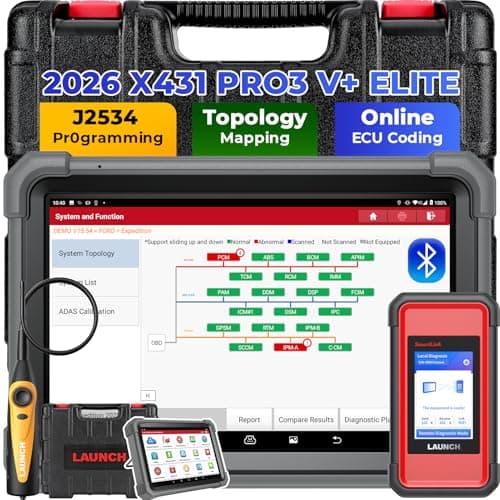
Launch X431 PRO3 V+ Elite: J2534 and 10.1 in Gorilla Glass
From Best professional diagnostic tablets for a home garage or small shop
 See price on AmazonAmazon
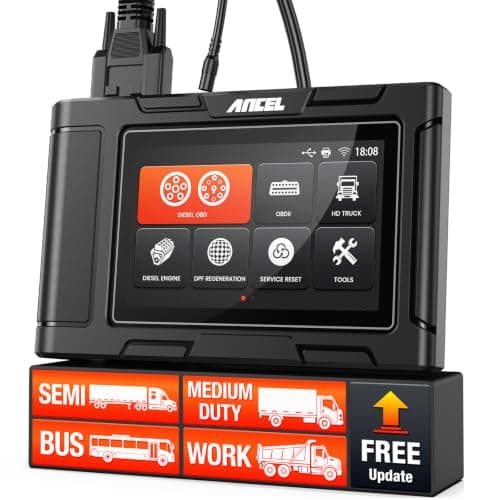
ANCEL HD3400 Pro: DPF regen across 8 engine makes
From Best heavy duty and diesel truck scanners with DPF regen